Table of Contents
The Head and Neck Region
The head houses many of the body's most important sensory organs and control centers, making the head and neck a logical place to start when learning partes do corpo humano ingles. The skull protects the brain, while the face contains the eyes for sight, the ears for hearing, the nose for smell, and the mouth for taste and communication. Key structures in this area include the jaw, called the jaw or mandible, and the neck, which in English is commonly referred to as the neck and contains the throat, or throat, and the windpipe, known as the windpipe.
When describing this region in English, you might also mention the cheeks, or cheeks, the lips, or lips, and the chin, or chin. The neck supports the head and allows it to move, while the throat houses both the airway and the passage for food. Familiarizing yourself with these terms in English makes it easier to follow instructions from a doctor, read health information, or talk clearly about injuries or symptoms.
Facial Features and Their Functions
Each feature of the face has a specific role in perception and expression. The eyes, or eyes, enable vision and help maintain balance, while the ears, or ears, support hearing and coordination. The nose, or nose, filters and warms the air you breathe, and the mouth, or mouth, allows you to eat, drink, speak, and express emotions. The tongue, or tongue, is vital for taste and articulation, and the teeth, or teeth, help break down food.
- Eyes – for seeing and balance
- Ears – for hearing and balance
- Nose – for breathing and filtering air
- Mouth – for eating, speaking, and tasting
- Tongue – for taste and movement of food
- Teeth – for chewing
Together, these structures form the facial region and are central to how you interact with the world. Using the correct English terms for these partes do corpo humano ingles helps you communicate more accurately in both casual and professional settings.
The Torso and Core Organs
The torso, or trunk, contains the chest, abdomen, and back, and it houses many of the body's vital organs. When discussing partes do corpo humano ingles, terms such as chest, chest, and abdomen, abdomen, are fundamental. The chest, or chest, protects the heart and lungs, while the abdomen, or abdomen, contains the stomach, intestines, liver, and other digestive organs. The back, or back, supports the spine and protects the spinal cord.
Inside the chest, the ribcage, or ribcage, surrounds and shields the lungs and heart. The diaphragm, or diaphragm, plays a key role in breathing by helping the lungs expand and contract. In the abdomen, the stomach, or stomach, begins the process of breaking down food, and the intestines, or intestines, absorb nutrients and water. Understanding these core structures gives you a clearer picture of how the body processes food and defends itself against illness.
Major Organs in the Torso
Several critical organs are located within the torso, each with a specific function. The heart, or heart, pumps blood throughout the body, while the lungs, or lungs, manage oxygen exchange. The liver, or liver, filters toxins and supports metabolism, and the kidneys, or kidneys, remove waste from the blood. The pancreas, or pancreas, produces enzymes and hormones, and the gallbladder, or gallbladder, stores bile that aids digestion.
- Heart – circulates blood
- Lungs – facilitate breathing
- Liver – detoxifies and metabolizes
- Kidneys – filter waste
- Pancreas – regulates digestion and blood sugar
- Gallbladder – stores bile
These organs work together to maintain balance, or homeostasis, inside the body. By learning the English names for these partes do corpo humano ingles, you improve your ability to understand medical advice, read health articles, and describe how you feel to a professional.
The Upper Limbs
The upper limbs include the shoulders, arms, elbows, forearms, wrists, and hands, and they enable a wide range of movement and interaction. When you study partes do corpo humano ingles, you will encounter terms such as shoulder, shoulder, arm, arm, and elbow, elbow. The forearm connects the elbow to the wrist and contains two bones, while the wrist, or wrist, links the hand to the arm.
The hand is one of the most complex parts of the body, with fingers, or fingers, and a thumb, or thumb, that allow for precise gripping and manipulation. Each finger contains joints that enable bending and straightening. Using the correct English vocabulary for these areas is helpful in sports, physical therapy, and daily conversations about pain or injury.
Structure of the Hand and Fingers
The hand consists of the palm, or palm, and the back of the hand, or back of hand, with the fingers extending from the palm. There are four fingers and one thumb, and each finger is made up of three phalanges, or phalanges, except for the thumb, which has two. The joints include the knuckles, or knuckles, and the fingertips, or fingertips.
- Palm – inner surface of the hand
- Back of hand – outer surface
- Fingers – four digits for manipulation
- Thumb – opposable digit for gripping
- Knuckles – joints between finger bones
- Fingertips – ends of fingers
Understanding these details helps you describe exactly where pain occurs or how an injury happened. Clear communication about the upper limbs is essential in both medical and everyday English.
The Lower Limbs
The lower limbs support the body's weight and allow movement such as walking, running, and jumping. When learning partes do corpo humano ingles, it is important to know the terms for the hip, or hip, thigh, or thigh, knee, or knee, and leg, or leg. The lower leg includes the calf, or calf, and the shin, while the foot contains the ankle, or ankle, and the toes, or toes.
The hip joint connects the leg to the torso and allows a wide range of motion. The knee is a complex joint that bends and straightens, and it is protected by the kneecap, or kneecap. The ankle provides stability during movement, and the foot distributes weight with the help of arches and muscles. Using precise English terms makes it easier to discuss exercise, injuries, and rehabilitation.
Foot Anatomy and Movement
The foot is divided into three sections: the forefoot, midfoot, and hindfoot. The forefoot includes the toes, or toes, and the metatarsals, or metatarsals. The midfoot forms the arches, and the hindfoot contains the heel, or heel, and the ankle joint. The toes help with balance and pushing off during walking, and the heel absorbs impact with each step.
- Toes – for balance and push-off
- Metatarsals – long bones in the midfoot
- Arches – distribute weight and absorb shock
- Heel – supports impact during walking
- Ankle – connects foot to leg
Strong and flexible feet are essential for mobility. By mastering the English vocabulary for these partes do corpo humano ingles, you can better understand fitness routines, medical advice, and descriptions of movement.
Skin, Hair, and Nails
The integumentary system includes the skin, hair, and nails, and it serves as the body's first line of defense. When discussing partes do corpo humano ingles, you will often refer to the skin, or skin, hair, or hair, and nails, or nails. The skin covers the entire body and helps regulate temperature, while hair provides protection and sensation in certain areas.
Nails, found on the fingers and toes, protect the tips and assist in fine tasks. Proper care of these tissues is important for overall health, and knowing the English terms allows you to describe symptoms such as rashes, dryness, or infections accurately. This vocabulary is especially useful when visiting a dermatologist or following hygiene guidelines.
Related Videos
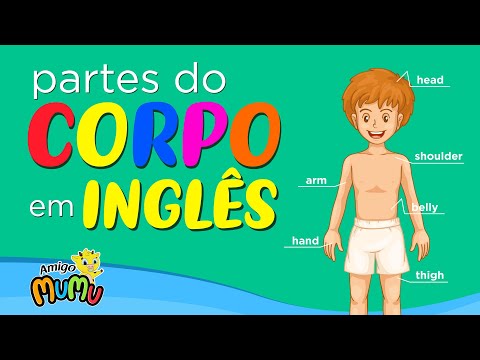
Partes do Corpo Humano em Inglês | Partes do Corpo em Inglês
Partes do Corpo Humano em Inglês | Partes do Corpo em Inglês Aprenda as partes do corpo humano em inglês, aprender inglês ...
Conclusion
Learning the names of partes do corpo humano ingles is a valuable step toward mastering English in both everyday and professional settings. By understanding the major regions—from the head and neck to the torso, limbs, and integumentary system—you gain a clearer mental map of the human body. This knowledge supports better communication, improves comprehension of health information, and builds confidence when discussing anatomy in English. As you continue to practice these terms, you will find it easier to talk about your body, follow medical guidance, and share information with others in a precise and confident way.
