Table of Contents
The Head, Neck, and Face in English
The head is the uppermost part of the human body and houses many of the senses and the brain. When learning partes do corpo humano em inglês, it is helpful to begin with the head and move downward in a logical order. The face includes the eyes, ears, nose, mouth, and cheeks, each playing a vital role in perception and expression. You can refer to the forehead, chin, jaw, and neck as you build your vocabulary for describing appearance or health issues.
Specific terms such as scalp, eyebrow, eyelash, and earlobe help you communicate details about injuries, grooming, or medical concerns. For example, you might mention a cut on your forehead, an itchy ear, or a sore throat that makes swallowing difficult. By learning these words as part of the broader set of partes do corpo humano em inglês, you gain the ability to describe yourself or others with precision and confidence in English-speaking environments.
The Torso and Internal Organs
The torso, or trunk, connects the head to the limbs and protects critical internal organs. When studying partes do corpo humano em inglês, you will encounter terms such as chest, abdomen, back, and waist. The chest contains the ribcage, which shields the heart and lungs, while the abdomen houses the stomach, liver, intestines, and other digestive organs. Describing pain or discomfort in these areas often requires precise English vocabulary, especially in medical settings.
Common references to partes do corpo humano em inglês also include the shoulders, hips, and spine, which support posture and movement. You may need to explain where you feel pain, such as a sharp sensation in the lower back or tightness in the chest, making it important to know the correct terms. Understanding these words helps you participate more effectively in conversations about fitness, injury recovery, and overall wellness.
The Upper Limbs and Hands
The upper limbs include the arms, elbows, forearms, wrists, and hands, each with detailed structures that are important in daily life. When learning partes do corpo humano em inglês, you should become familiar with terms like shoulder, bicep, tricep, palm, fingers, and knuckles. These words are useful in physical therapy, sports, and even casual conversations about how you use your hands at work or during hobbies.
The hand consists of the palm, the back of the hand, fingers, and thumbs, all of which allow for fine motor skills and gripping. You might describe holding an object, pointing to a location, or typing on a keyboard using this vocabulary. By mastering these terms as part of your study of partes do corpo humano em inglês, you improve your ability to follow instructions, explain tasks, and understand diagrams or videos in English.
The Lower Limbs and Feet
The lower limbs consist of the hips, thighs, knees, legs, ankles, and feet, all of which are essential for movement and balance. When expanding your knowledge of partes do corpo humano em inglês, focus on words such as quadriceps, hamstring, calf, shin, and sole. These terms are especially valuable in discussions about exercise, injury, or rehabilitation, where clarity can make a significant difference.
The foot includes the heel, arch, toes, and nails, and problems in this area can affect your entire posture and mobility. Describing a sprained ankle, choosing proper footwear, or following a doctor’s advice requires accurate English vocabulary. By learning these parts of the body as part of your study of partes do corpo humano em inglês, you prepare yourself for real-world situations that involve health, travel, and physical activity.
Systems and Functions to Support Your Learning
- The skeletal system provides structure and protection for soft tissues.
- The muscular system enables movement, posture, and stability.
- The circulatory system transports blood, oxygen, and nutrients throughout the body.
- The nervous system coordinates communication between the brain and the rest of the body.
When you connect the vocabulary of partes do corpo humano em inglês with an understanding of how these systems work, you gain a deeper insight into how the human body functions. This knowledge is helpful not only in language learning but also in science classes, health education, and personal awareness.Practical Tips for Remembering Body Parts in English
One effective way to learn partes do corpo humano em inglês is to label diagrams or use flashcards that pair images with English words. Visual association strengthens memory and helps you recall terms when you need them in conversation. You can also practice by describing your daily routine, such as washing your face, brushing your teeth, or stretching your legs after sitting for a long time.
Listening to English-language podcasts, watching medical or fitness videos, and repeating new words aloud can reinforce your understanding of the human body. As you build confidence with partes do corpo humano em inglês, you will find it easier to read articles, follow instructions, and communicate clearly in a variety of situations.
Related Videos
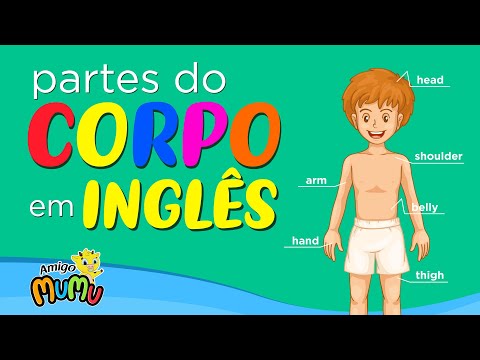
Partes do Corpo Humano em Inglês | Partes do Corpo em Inglês
Partes do Corpo Humano em Inglês | Partes do Corpo em Inglês Aprenda as partes do corpo humano em inglês, aprender inglês ...
Conclusion
Learning partes do corpo humano em inglês is more than memorizing a list of words; it is about gaining the language skills needed to talk about health, movement, and daily life with clarity. By exploring the head, torso, limbs, and underlying systems, you create a strong foundation for communicating in English in both personal and professional contexts. With consistent practice and real-life application, these terms become a natural part of your English vocabulary, empowering you to understand and describe the human body accurately and confidently.
